The gutters are your home’s external circulatory system. When they fail, your property suffers a structural “cardiac event” of water damage that can lead to foundation cracks and rot. It’s a high-stakes job for the gutters, yet many homeowners ignore them until the damage is already done. You might worry about the $4,000 average cost to replace your system or feel confused by the upcoming 9th Edition of the Florida Building Code requirements. That anxiety is normal, but it doesn’t have to be your reality.
We’re here to provide a professional diagnosis for your home’s wellness. You’ll discover exactly how your drainage system functions as a first line of defense, from the role of the fascia to the benefits of seamless aluminum. We’ll compare the $8 to $28 per linear foot cost of seamless options against traditional sectional styles so you can make an informed investment. This guide covers vital failure signs, professional maintenance strategies, and the latest 2026 smart sensor trends to ensure your home stays protected and dry.
Key Takeaways
- Understand how the gutters function as your home’s external circulatory system to prevent foundation damage and preserve structural health.
- Identify the core components of your drainage system, including downspouts and hangers, to better understand their vital role in water management.
- Compare seamless and sectional options to decide between a long-term professional cure or a temporary DIY fix for your property.
- Learn to perform a ground-level wellness check to spot “silent killers” like peeling paint and basement dampness before they become costly repairs.
- Discover how professional flushing and gutter guards act as preventative medicine to ensure the long-term durability of your home’s exterior.
What Exactly Are “The Gutters” and Why Does Your Home Need Them?
Think of your home as a living organism. Just as your body relies on veins to move blood, your house depends on a network designed to divert rainwater safely away from its core. This system, commonly known as the gutters, acts as the primary defense against the elements. Without this critical infrastructure, a single heavy storm can dump thousands of gallons of water directly onto your roofline and soil. When you ask What is a rain gutter?, you’re looking at the most essential component of residential water management. A rain gutter is a narrow channel that collects and redirects water to prevent erosion.
From a professional perspective, we view these channels as preventative care for your home’s structural health. Neglecting them is like skipping a vital checkup. Missing or failing systems lead to immediate complications. Basement flooding, hazardous mold growth, and severe soil erosion aren’t just inconveniences; they’re symptoms of a failing exterior. With the global rain gutter market projected to reach $11.39 billion by 2030, it’s clear that homeowners are waking up to the necessity of these systems. Approximately 52% of homeowners now prioritize preventive maintenance to avoid the “cardiac event” of a flooded basement.
The Critical Role of Water Management
Water doesn’t just fall; it collects and destroys. Properly installed systems protect your fascia boards and roofline from constant moisture exposure. Without them, wood rot sets in quickly, compromising the edges of your roof and inviting pests. You’ll also notice “trenching” around your home’s perimeter. This happens when water falls from the eaves with enough force to carve deep grooves into your landscaping. Effective management also preserves your siding longevity by preventing backsplash that carries dirt and wood-destroying organisms onto your exterior walls. It’s about keeping the entire “skin” of your house healthy and dry.
Why Foundation Protection is the Priority
The foundation is your home’s skeleton. When water pools at the base, it creates hydrostatic pressure. This physical force is strong enough to crack solid concrete and shift entire load-bearing walls. Keeping crawlspaces and basements dry isn’t just about comfort; it’s about structural stability. We consider the gutters to be the most cost-effective insurance policy you can buy for your property. By moving water at least five to ten feet away from the slab, you eliminate the primary cause of structural failure before it starts. It’s a simple fix that prevents a five-figure foundation repair bill later.
Anatomy of a Gutter System: Beyond the Metal Channels
To understand how the gutters protect your home, you must look at the individual components that make the system functional. It isn’t just a metal tray. It’s a precise assembly anchored to your fascia board, which acts as the “skeleton” for the entire setup. If the fascia is rotted or weak, the system cannot hold the weight of heavy rainfall. One common misconception is that gutters are perfectly level. They aren’t. We install them with a specific “pitch,” typically sloping 1/4 inch for every 10 feet of run. This ensures gravity pulls water toward the downspouts rather than letting it pool and stagnate in the troughs.
The system also relies on “connective tissue” to remain watertight. End caps seal the ends of each run, while miters connect the channels at the corners of your roof. Elbows are the joints that allow downspouts to navigate around the eaves and down the side of your house. While understanding this anatomy is vital, practicing Gutter Safety during any ground-level inspection is the first rule of home maintenance. If you suspect your system is sagging or pulling away, it’s time to schedule a professional inspection to prevent further damage.
Troughs and Downspouts: The Main Arteries
Modern homes typically use K-style troughs, which resemble crown molding and hold more water than traditional half-round profiles. Half-round gutters are often reserved for historic restorations due to their classic U-shape. Regardless of the style, your downspouts must be sized correctly for your roof’s surface area. We often recommend 3×4 inch downspouts over the standard 2×3 inch size for homes in high-rainfall areas. Larger downspouts reduce the risk of clogs and move water faster. Extensions at the bottom are equally important; they ensure water exits at least 5 feet away from your foundation “danger zone.”
Hangers and Fasteners: The Support System
The method used to secure the gutters determines their lifespan. Older homes often have spike-and-ferrule fasteners, which are large nails that can pull out over time. We prefer hidden hangers. These are internal brackets that screw directly into the fascia, providing a cleaner look and superior strength. Hanger spacing is the most critical factor in preventing system failure. In regions with heavy snow or debris, hangers should be placed every 2 feet. Using rust-resistant stainless steel or heavy-duty aluminum fasteners ensures the support system doesn’t corrode and snap under pressure.

Seamless vs. Sectional: Which “Gutters” Provide the Best Cure?
Choosing the right drainage system for your home is the difference between a temporary patch and a permanent solution. We often categorize sectional gutters as a “DIY bandage” while viewing seamless systems as the definitive “professional cure.” Seamless gutters are roll-formed on-site from a single piece of heavy-duty aluminum or steel using a specialized gutter machine. This allows us to create a continuous channel that fits your home’s specific dimensions to the exact inch. When you invest in the gutters that are manufactured specifically for your roofline, you remove the weakest link in water management: the seam.
Investing in a seamless system is a proactive step toward long-term home wellness. For a typical 2,000-square-foot home requiring 200 linear feet of material, a professional seamless installation averages approximately $1,511. While this initial investment is higher than the $3 to $20 per linear foot you might pay for sectional parts, the value lies in durability. Seamless options, which range from $8 to $28 per linear foot installed, eliminate the recurring costs of re-sealing leaks and repairing water-damaged fascia. It is the most reliable way to ensure your home remains protected during heavy downpours.
The Vulnerability of Sectional Systems
Sectional systems are composed of pre-cut lengths that installers join together with plastic or metal connectors. These joints are the primary point of failure in any exterior drainage setup. Over time, thermal expansion causes the metal to grow and shrink, which inevitably pulls the seams apart. The sealant used to bridge these gaps eventually dries, cracks, and leaks under the pressure of extreme weather. Debris also loves to catch on the internal ridges of these connectors, leading to clogs that are difficult to clear. These “DIY” options often require a replacement within just a few years of installation.
The Advantages of Seamless Solutions
Seamless gutters offer a custom-fit precision that “one size fits all” products simply cannot match. Because they are manufactured in a single continuous run, they provide clean, uninterrupted lines that enhance your home’s curb appeal. They also require significantly less maintenance. Without interior seams to snag leaves or twigs, water flows freely to the downspouts. This efficiency contributes to a much longer lifespan and better performance. Choosing seamless the gutters means you are selecting a system designed to endure the elements without the constant need for “first aid” repairs.
Diagnosing Common Ailments: When Your Gutters Are Failing
You don’t need a ladder to perform a basic health assessment of your home’s exterior. Regularly performing a ground-level wellness check can save you thousands in structural repairs. We teach homeowners to look for the “silent killers” that signal the gutters are failing. Peeling paint on your siding, rust spots along the metal channels, and persistent basement dampness are more than just cosmetic issues. These are clear symptoms that moisture is escaping the drainage system and attacking your home’s structural integrity. Approximately 52% of homeowners now invest in preventative maintenance, recognizing that early diagnosis is the key to avoiding a total system collapse.
If you notice a visible gap between the trough and your roofline, treat it as a structural emergency. When the system begins pulling away from the fascia, it loses its ability to capture water, leaving the wood skeleton of your home exposed to rot. Many homeowners misdiagnose overflowing water as a simple clog. In reality, this is often a symptom of poor pitch. If the slope is off by even a fraction of an inch, water will pool and spill over the edge regardless of how clean the troughs are. To ensure your system is properly aligned and functioning, schedule a professional inspection before the next storm arrives.
Visible Signs of Gutter Distress
Visible distress often manifests as sagging sections. This usually indicates that the hangers have failed or the system is buckling under the extreme weight of wet debris. You should also watch for “tiger stripes.” These dark vertical streaks on the outside of the metal occur when dirty water consistently overflows and bakes into the finish. After a light rain, walk your property’s perimeter. If you see pooling water near the foundation, the system has failed its primary mission. These signs are the home’s way of showing it needs immediate attention.
Hidden Symptoms of Water Damage
Some symptoms hide in plain sight. Inspect your landscaping for soil erosion or displaced mulch directly below the roofline. This is a definitive indicator that water is bypassing the troughs. Look closely at your soffit and fascia boards; if the wood appears dark, soft, or crumbly, rot is already spreading behind the metal. The most alarming signs often appear inside the home. Musty smells in the basement or fine cracks in the interior drywall are often the result of long-term water saturation at the foundation level. These internal “aches” require a professional cure to prevent permanent damage.
Professional Care: Ensuring the Long-Term Health of Your System
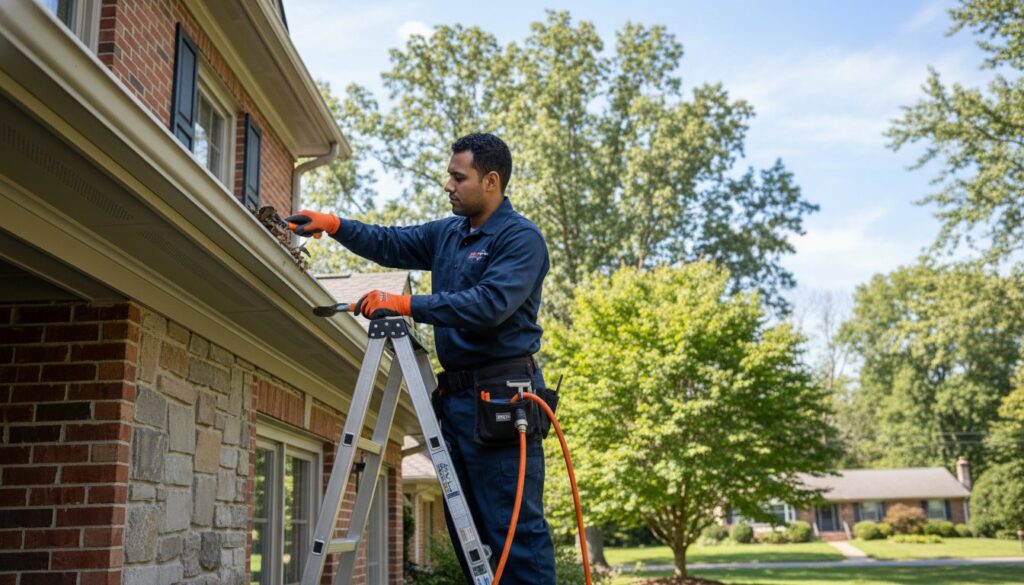
Maintaining the gutters requires more than a casual sweep once a year. Think of professional care as a routine wellness checkup for your property. When we perform a professional cleaning, we don’t just scoop out leaves. We conduct a full system flush. This process allows us to diagnose hidden leaks and verify that the pitch remains accurate after a season of heavy weather. Catching these small alignment issues now prevents the need for major structural “surgeries” later. A bi-annual maintenance schedule, typically in the spring and fall, ensures your home remains in peak condition year-round.
Safety is a primary concern for every homeowner. DIY ladder work is notoriously dangerous, accounting for thousands of household injuries annually. Professional exterior services provide a hassle-free alternative that keeps you on the ground while experts handle the high-altitude labor. We use specialized equipment to clear downspouts and inspect every fastener. This disciplined approach guarantees that your first line of defense never fails when you need it most. It’s about the peace of mind that comes from a job well done by a team that treats your home like their own.
The Value of a Professional Gutter Guard
We view gutter guards as “preventative medicine” for your drainage system. Modern micro-mesh technology is a major trend in 2026, using surface tension to shed debris while allowing water to flow freely. These systems keep out even the smallest pine needles and grit. By eliminating standing water and organic buildup, you also reduce the risk of pest infestations. Mosquitoes and birds often use clogged troughs as breeding grounds. Additionally, professional installation is vital. Most roofing manufacturers require certified guard installation to maintain your existing roof warranties. It’s a smart investment that reduces cleaning frequency and protects your long-term assets.
Choosing Your Gutter Doctor
Selecting the right specialist is critical for the health of your home. Always look for a team with proper licensing, comprehensive insurance, and specialized roll-forming equipment. A “Seamless Solution” is the standard for excellence, providing a frictionless experience from the initial diagnosis to the final install. We take immense pride in our craftsmanship and meticulous attention to detail. Don’t wait for a leak to become a flood. Schedule your free gutter health estimate with Gutter Doctor Solution today!
Secure Your Home’s Structural Wellness
Protecting your foundation starts with a system that manages water with precision. You now have the diagnostic tools to spot failing hangers or poor pitch before they lead to costly rot. Choosing seamless technology over sectional alternatives provides the permanent cure your home needs to withstand extreme weather. It’s the most reliable way to ensure the gutters remain a functional first line of defense rather than a hidden liability.
We take immense pride in being a family-owned and operated local specialist. Our team is fully licensed and insured to provide you with total peace of mind during every project. We back every installation with guaranteed workmanship, ensuring your property receives the meticulous care it deserves. Let us provide the professional diagnosis and long-term treatment your home requires to stay dry and secure.
Get Your Free Estimate for Seamless Gutter Solutions
Your home is your biggest investment; let’s keep it protected together.
Frequently Asked Questions
How often should I have the gutters cleaned?
Clean your system at least twice annually, specifically in late spring and late autumn. This schedule ensures that the gutters are clear of seasonal debris like spring seeds and fall leaves. Approximately 52% of homeowners invest in this type of preventive care to avoid structural issues. If your property is surrounded by heavy foliage, you might need a checkup every three months to maintain optimal water flow.
Can I just repair a small leak in my gutters myself?
You can apply a temporary sealant to a small leak, but it’s rarely a permanent cure. Most DIY patches fail within 12 to 24 months due to the constant expansion and contraction of the metal. Professional repairs involve diagnosing the root cause, such as a failing seam or poor pitch, to ensure a long-term solution. For a definitive fix, replacing the compromised section with a seamless component is often the best medicine.
How long do seamless gutters typically last compared to sectional ones?
Seamless systems typically last 20 to 30 years with proper maintenance, while sectional gutters often require replacement after 10 to 15 years. The lack of joints in a seamless installation eliminates the primary points where rust and leaks begin. Because they are custom-formed on-site, they provide a more durable “skin” for your home’s exterior. This longevity makes them a more cost-effective investment for your home’s structural health over time.
What is the best material for gutters in a climate with heavy snow?
Galvanized steel or heavy-gauge aluminum are the most resilient choices for regions with significant snowfall. These materials resist bending under the weight of ice dams and heavy slush. We recommend installing hangers every 24 inches in these climates to provide extra support for the gutters. This prevents the system from sagging or pulling away from the fascia during the winter months.
Do gutter guards really eliminate the need for cleaning?
Gutter guards significantly reduce maintenance but don’t completely eliminate the need for an occasional wellness check. High-quality micro-mesh systems can block 99% of debris, though fine sediment and pollen may still require a light flush every few years. In 2026, many homeowners are also integrating smart sensor technology into their systems. These sensors provide real-time alerts about water flow, ensuring you never miss a potential blockage.
Why are my gutters pulling away from the house?
Your drainage system pulls away when the fascia board becomes rotted or the hangers lose their grip. This is often caused by the extreme weight of stagnant water and debris that has been trapped in the troughs for too long. If you see a gap, treat it as a structural emergency. The water bypassing the system will saturate your foundation, leading to the hydrostatic pressure issues we discussed in the beginning of this guide.
What happens if I don’t have gutters on my home at all?
Without a functional drainage system, rainwater will erode the soil around your foundation and cause basement flooding. This constant moisture exposure leads to mold growth and can weaken the structural integrity of your slab or crawlspace. The cost of foundation repair is significantly higher than the investment in a professional gutter system. Gutters are your home’s first line of defense against five-figure foundation repair bills.
How much does a typical gutter replacement cost?
The average cost for a professional gutter replacement in 2026 is approximately $4,000, with most projects falling between $2,800 and $5,200. Professional installation typically ranges from $4 to $40 per linear foot depending on whether you choose vinyl, aluminum, or premium copper. Remember to account for the removal of your old system, which usually adds about $0.65 to $0.85 per linear foot to the total project estimate.